
Titus, Kusebu Pariola
Birth and Early Life
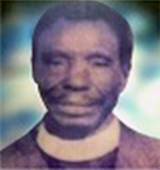
Titus Kusebu Pariola [1] was an ordained minister and the first African superintendent of The Apostolic Church, Nigeria, Kabba Area. He born in 1885 to the family of Pa Olukohi Oloko and Madam Igunnufende Naomi of Ofin-Isanlu community, Isanlu, in Kogi State, Nigeria. [2] Providentially, in 1915, he travelled to Abeokuta and in 1916 to Lagos in search of greener pastures. In order to lead a better life, he struggled to have formal education at Academy Primary School in Lagos. With perseverance and humility, Titus spent eight years on the Nigerian Reader and other Basic studies. He also earned a Grade II certificate. At completion, he was judged to be the first person to have had access to formal education up to that level in Yagbaland. [3]
Education, Marriage, and Family
Titus had the opportunity to work with the Native Authority, Kabba but he chose instead to work in Christian ministry. He received a scholarship from SIM (Sudan Interior Mission), and between 1923-1925, attended Bible College in Agunjin via Oke-bode in Igbomina province, Nigeria. In 1925, he joined SIM under the tutelage of a white missionary, Rev. William Craig, at Ayin Agigi in Makutu-Isanlu. Thus, Titus was known as “Rev. K.P.” because of his SIM background. On September 15, 1927, Titus married Rebecca Yenumo Job, and the wedding was celebrated at the SIM base in Isanlu, Kogi State, Nigeria. The marriage was blessed with seven children: Tunde Samuel, Pariola, John, Folorunso, Pariola, and Queen Elisabeth Ikuborije. Titus’s devoted Christian life impacted his children positively such that through their commitment to Christian virtues, each of them later contributed significantly to the propagation of Christianity in Kabba, Okunland of Kogi State, Nigeria. [4]
Christian Life and Ministry in The Apostolic Church Nigeria (TACN)
As a social activist, Titus promoted the revival of African cultural values in forms of traditional dressing and the use of Yoruba language. He emphasised the uniqueness of African cultural values, stating that they were not in any way inferior to the white missionaries’ imported cultural values. As a result of Titus’ stance on the promotion of African culture and his determination for social emancipation, he was accused of disobedience to the SIM church’s constituted authority. As a result, SIM’s authorities stopped his monthly stipend of 21 pence. [5] In order to make ends meet, Titus resorted to buying and selling yam flour.
Later, he joined the Faith Tabernacle Congregation, which metamorphosed into The Apostolic Church Nigeria (TACN) in Kabba and entire Okunland of Kogi State, Nigeria. In 1936, the leaders of TACN ordained Titus and his friend, Abel O. Adu to the pastorate at Ekotedo, Ibadan. [6] Then, Titus improved on his evangelistic activities such that he considered the daylight as not being sufficient time to work for the Lord. Thus, he used to travel in the night to hold vigils with the members of TACN which he established in Yagba, Bunu, Gbedde, Owe, and some other places like in Ondo and Otukpo. [7] Titus also believed in a social gospel. Hence, he emphasized social ministration in the form of social empowerment through basic education and the introduction of cash crops such as cocoa and coffee. To him, to be educated was to be relevant in society and to be able to fight for one’s cause.
Titus’ collaborative efforts with some European missionaries like A. A. Hanson and S. G. Elton in the planting of TACN in Okunland, Northern-Central, Nigeria cannot be over emphasized. In subsequent order, TACN was first established at Makutu-Isanlu, and the number of people that fellowshipped in the church the first day were 14. In 1932, the people of Ayeteju- Agbajogun and Orokere-Araromi who were formerly of Sudan Interior Mission also joined TAC. [8]
In TACN, Titus adopted several strategies for the propagation of the gospel. Firstly, Titus sought to preach and make friends with the community leaders such as kings, baales/community heads, and village heads. That practice provided some opportunities for bridging faith and cultural gaps and was a means for alleviating the problem that used to be provoked by unnecessary social gaps in the community. The community leaders were known for enhancing the propagation of the gospel and the planting of TACN in Yagba, Bunu, Gbedde, Owe, and Ijumu. [9] Secondly, Titus promoted social emancipation through the provision of secular education to the members of his community. Among with those who enjoyed the provision of primary education were Isaac Taylor, Peter Orimolade (who later became the king of Mopa in Kogi State, Nigeria), Samson Olorunfemi, Ernest Adeoye (one time Baale of Orokere-Amuro), and Naoti Alonge. [10] In return, the beneficiaries of his social actions were committed to the spreading of Christian faith in Okunland. Thirdly, he encouraged the Kabba people to live where they could enjoy social amenities such as roads, water, and electricity. For instance, Titus enjoined the people of Araromi who hitherto had been living in a mountainous secluded forest area to come down to a nearby bigger community where they could enjoy these benefits.
Social and Economic Aims
Moreover, Titus considered rural, peasant life as a killer. In other words, he believed that if you entertained poverty in your household and did nothing to fight it, it would kill you. [11] His explanation about the cause of poverty in a particular community that was predominated by peasant farmers was as follows: when a whole community engaged in single agro-economy (i.e. planting the same type of crop like maize, yam, or cassava, without any accompanying crops), then there would be the tendency toward market monotony, or low market value, for the farm produce. In other words, it was not expected that a yam-planter would be looking for yams to buy, and therefore there would be a cheap and slow market for farm produce and consequently poverty would set in.
Therefore, to combat this market problem, Titus introduced the scheme of planting varieties of cash crops like cocoa, coffee, cashew, kolanut, etc. This process of planting varieties facilitated the alleviation of poverty in the community. [12] In the process, poverty levels were reduced in Okunland of Kogi State, Nigeria.
Education was also important for Titus. Traditional institution forms the basis of political organization in any African community. Thus, Titus encouraged the traditional rulers in Okunland to become literate in order to be relevant to the growing society. To him, in modern Nigeria, traditional rulers that could not read or write would be irrelevant. In this way, one Shaba of Takete-Ide, [13] Chief Eleso Ogbondeminu, who was supposed to succeed the Olude of Takete-Ide in 1969, decided to give way to those who had formal education. According to Ayedogbon, Shaba of Takete-Ide refers to the second in command to the king of the town, Takete-Ide, in MopaMuro Local Government of Kogi State, Nigeria. The custom of Takete-Ide holds that Shaba should succeed the departed king. However, the man broke the tradition due to his deficiency in formal education. Shaba suggested that a more competent and educated person be chosen in his stead. That decision led to an unresolvable uproar, as neither the learned nor the illiterate ones were allowed to come to the throne of the Olude of Takete-Ide till 1982 when another king was enthroned.
Practical Christianity
Titus emphasized practical Christianity in his preaching and teaching of the gospel. To him, religion was that which you practiced and taught, which is what he encouraged his followers to do. He often took his followers to the river bank with a view to practising fishing and taught that some of the things people experienced in fishing like endurance, hard labor, profit, and loss were also mainstays of Christian mission. To Titus, any Christian that could not endure hardship and trials would hardly make headway in Christian ministry. Therefore, he enjoined his followers to endure hardship and to lead sacrificial lives to the service of the Lord Jesus.
He also emphasized forgiveness in Christian practice. He exercised this on many occasions. For instance, Ayedogbon [14] asserts that a thief was caught on Titus’ yam plantation with three sacks of yams. Titus asked the man directly if indeed he was guilty of the theft and the thief answered in the affirmative. Then, Titus held the thief’s leg, cried, prayed with him for forgiveness of sins, and committed the whole yam plantation into the thief’s hand. On that point, the thief had a change of heart, surrendered his life to the Lord, and became a committed follower of Jesus through Titus. Thus, he showed that forgiveness can enhance love and is a true demonstration of Christian faith.
Contributions to Church Growth
For the time in which he lived, Titus travelled widely and had diverse experiences, both religious and secular, through the opportunities he used to promote Christian missions and improving social circumstances in Kabba and its environs. Notably, Titus’ commitment to educational development, his stance on social improvement, and commitment to practical Christianity, such as exercising the practical forgiveness of sins and divine healing contributed to his achievements in the planting of TACN in Okunland, Northern-Central Nigeria and its environs. Titus was a community builder, encouraging those living in smaller communities to come together to form larger towns with helpful amenities. Eventually, places like Ayetoro-Gbede, Amuro, and Isanlu developed into towns. Currently, TACN is strong in these communities.
Also, Titus’ commitment to Christian ministry endeared him to many converts who later became his associates in TACN. For instance, among his ardent disciples were Josiah Abereoran of Ayeteju Agbajogun; Robert Omokere; and Malachi Aguda, of Orokere. Other disciples included Peter Agunbiade of Ijero-Okagi, Philip of Otafun, and Hosea Obajemo of Ayeteju Amuro. Subsequently, when TACN, Kabba, which was formerly a cluster of 3 Districts within Ilesa jurisdiction, grew and assumed the status of an Area in 1947, Titus was appointed as the first African superintendent, TACN, Kabba Area. [15]
From the foregoing, it could be inferred that Titus contributed immensely to the development of TACN in Kabba and its environs in Kogi State, Nigeria. Up until his death, Titus encouraged both his biological and spiritual children in the Lord. He conducted pastoral visitation to some of the units of TACN he planted in Kabba and its environs. Due to old age and stress of the ministry, he fell sick and died at Ayetoro-Gbede at 85 years old. He was buried in July 1970 at the cemetery of TACN, Isanlu, Kogi State, Nigeria.
Caleb Abiodun Adeleye, with Oluwasegun Peter Aluko
Notes:
- Titus, Kusebu Pariola was the first African Superintendent, The Apostolic Church Nigeria, Old Kabba Area, Kogi State, Nigeria.
- This work forms part of the research in C. A. Adeleye (2017), “Pastor Kusebu Pariola Titus, 1885-1970 (First African Superintendent, TACN, Old Kabba Arae)” in S. A. Fatokun (ed) A Pentecost from Africa to Europe, from Europe to Africa: History and Distinctiveness of The Apostolic Church Nigeria, 1918-2017, Ibadan: Global Estida Publishers, 541-545. Henceforth, Titus Kusebu Pariola will be referred to as Titus for simplicity.
- Church Document (1999), Itan Igbesi Aiye Olusoaguntan K. P. Titus: 1885-1970, Lagos: Adeolu Printers, 4-7; J. O. Bando, Superintendent, TACN, Egbe Area, Kogi State, Interview by author, August 8, 2013.
- Church Document (1999), 18.
- Ibid., 9.
- Ibid., 11.
- J. O. Bando, Interview by author, August 8, 2013; J. K. Ayedogbon, Lecturer/Apostle, TACN LAWNA Theological Seminary, Ilesa, Interview by author, September 13, 2013. Whenever Titus talked about a paucity of time to work for the Lord, he always referred to John 9: 4.
- Church Document (1981), TACN, 1931-1981, Souvenir/Brochure, 50th Anniversary, Golden Jubilee, Ilesa: Olufemi Press, 16.
- Church Document (1999), 13.
- Church Document (1999), 14.
- J. K. Ayedogbon, Interview by author, September 13, 2013.
- Ibid.
- Ibid.
- Ibid.
- T. N. Turnbull (1959), What God Hath Wrought: A Short History of The Apostolic Church (Bradford: The Puritan Press), 79; Church Document (2011). The Apostolic Church, Bunu Area, 2001-2011, Brochure, 10th Annual Convention, 9-11th December 2011, 13-14.
Bibliography
Adeleye, C.A., (2017). “Pastor Kusebu Pariola Titus, 1885-1970 (First African Superintendent, TACN, Old Kabba Arae)” in S. A. Fatokun (ed) A Pentecost from Africa to Europe, from Europe to Africa: History and Distinctiveness of The Apostolic Church Nigeria, 1918-2017, Ibadan: Global Estida Publishers, 541-545. Ayedogbon, J. K., Interview by author, September 13, 2013. Bando, J.O., Interview by author, August 8, 2013. Brochure, 10th Annual Convention, 9-11th December 2011. Church Document, (2011). The Apostolic Church, Bunu Area, 2001-2011. Church Document, (1999). Itan Igbesi Aiye Olusoaguntan K. P. Titus: 1885-1970, Lagos: Adeolu Printers. Church Document, (1981). TACN, 1931-1981, Souvenir/Brochure, 50th Anniversary, Golden Jubilee, Ilesa: Olufemi Press. Turnbull, T. N., (1959). What God Hath Wrought: A Short History of The Apostolic Church (Bradford: The Puritan Press).
This article, submitted in March 2025, was researched and written by Caleb Abiodun Adeleye, a facilitator with National Open University of Nigeria, Osogbo Study Centre, Nigeria, and minister of the gospel with The Apostolic Church Nigeria; and by Oluwasegun Peter Aluko, who is Associate Lecturer, Obafemi Awolowo University, Ile-Ife, Nigeria.