
Claverie, Pierre (B)
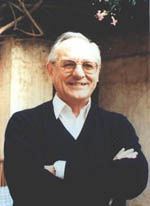
Pierre Claverie, Bishop of Oran
Pierre Claverie was born in Algiers on May 8, 1938. At the age of twenty, he was admitted to the Dominican Order. He pursued his studies in France, Algeria, and Cairo. Afterwards, he was ordained priest on July 4, 1965. Following his ordination, he returned to Algeria. “Sent to the land of my childhood, I rediscovered everything”, he says. Finally, he was consecrated bishop of Oran on October 2, 1981.
Sadly, Mgr Claverie was the victim of a bomb attack. With him died Mohamed Bouchikhi, a young Muslim who was replacing the bishop’s driver for a few days.[1] Returning from the capital’s airport, “on August 1, 1996, at 10:48 p.m., they entered the bishop’s palace and switched on the light in the vestibule. A loud explosion sounded: both were killed instantly, Pierre Claverie with his head on the threshold of his chapel and Mohamed behind him at the bottom of the steps. The sisters who had heard them come in from the neighboring house rushed to the scene: Pierre and Mohamed lay, blood mingled, in a devastated hallway. The terrible shock came from an iron door opening onto an alleyway, usually guarded.”[2]
Many Muslims were present in Saint-Eugène church to bid farewell to the bishop murdered by the GIA.[3] The mass was presided over by Cardinal B. Gantin, sent by the Pope. Mgr H. Teissier wrote that the funeral was “a unique assembly, probably never seen before in the fourteen centuries of Islam. This Christian assembly where the majority of Muslims mourned and celebrated a brother bishop whose ministry had meaning not only for the Christian community but for a great number of people in the Muslim community.”[4]
“His assassination is the work of madness, of the forces of evil. It tarnishes the image of Islam. In losing Mgr Claverie, Muslims and Christians have lost an opportunity to meet. But we still have his witness… I am amazed and challenged by the will of Christians to stay there, despite everything. They are witnesses to the richness of Algeria, they are an additional battalion to build this country”, affirmed Soheib Bencheick, Grand Mufti of Marseille.
What are you doing over there?
Born into a French family that had lived in Algeria for three generations, Pierre Claverie naturally felt Algerian. An excellent connoisseur of Islam, he believed in the need for a genuine dialogue between religions in order to move towards peace. The violence of the 1990s confirmed his choice of frank dialogue and rejection of all intolerance and fundamentalism. He himself once illustrated the vision to which he wanted to dedicate his pastoral activity: “It seems to me that pluralism is a major challenge of our time. We are close to each other, we live among each other: are we going to perpetuate our quarrels and wars? Are we going to resume our conquests and revive our anathemas, giving free rein to our desire for power and domination?”[5]
When asked whether, for security reasons, religious personnel should not leave the country, he replied:
“Our departure would not solve any problems, but it would consecrate the definitive rejection of our differences. It would mean that we accept, once and for all, the fact that it is impossible for different people to get along. In Algeria or anywhere else, including Europe. Since the beginning of the Algerian drama, we’ve often been asked: “What are you doing over there? Why are you staying there? Because of Jesus, nothing else. We have no interest in saving. We are not driven by some masochistic or suicidal perversion. We have no power, but we are there as if at the bedside of a sick friend, in silence, shaking his hand or sponging his forehead. Because of Jesus, because it is he who is suffering here, in this violence that spares no one, crucified once again in the flesh of thousands of innocents. Like Mary, his mother, and Saint John, we are there, at the foot of the Cross, where Jesus dies, abandoned by his own and mocked by the crowd. Is it not essential for Christians to be present in places of suffering and dereliction? What would the Church of Jesus Christ, itself the Body of Christ, be if it weren’t there in the first place? I believe it is dying because it is not close enough to the Cross of its Lord. Paradoxical as it may seem, as Saint Paul clearly shows, that’s where her strength, vitality, hope and fruitfulness come from. Not from anywhere else. Everything else is just window dressing, a worldly illusion. It deceives itself, and it deceives the world when it positions itself as a power among others, as a humanitarian organization, as a showy evangelical movement.”[6]
He felt he was caught between “two islams”: the friendly, moderate Islam that forms the backdrop of the memory and traditions of the Algerian people - a people who did not spare him their affection - and the radical, combative Islam of the armed groups. The terror wielded by supporters of the latter over those of the former had been consolidated by tens of thousands of murders and a fanatical rhetoric that Claverie never hesitated to dismantle. He told the weekly magazine La Vie that he had got into the habit, when leaving his home, of looking around for any suspicious silhouettes. And to make detours to throw off any pursuers. “But you learn to live with fear and overcome it,” he added with a smile. And he continued to criss-cross the roads of his diocese.[7]
“I’ve campaigned for dialogue and friendship…it’s probably worth dying for, I assume the risk. The watchword of my faith today is dialogue; not out of tactics or opportunism, but because dialogue is constitutive of the relationship between God and man, and between man and man.”
He was buried with the stole on which was embroidered “Allah mahabba”, God is love.
P. Neno Contran et Abbé Gilbert Kadjemenje
Sources:
-
From the notes written in his diary, it emerges that the driver was aware of the danger of working with Christians. “For all those who have helped my family, bishop, priests and sisters, I am ready to give my life”.
-
J-J Pérennès, Pierre Claverie. Un algérien par alliance, Paris, Cerf, 2000, p. 369-370.
-
Armed Islamic Group.
-
Lettres d’Algérie, Paris, Bayard-Centurion, 1998, p. 75.
-
08.05.1994.
-
Homily, 23.06.1996.
-
Jean-Pierre Manigne, no. 2658, 08.08.1996.
This article is reproduced, with permission, from Contran, P. Neno, and Abbé Gilbert Kadjemenje, Cibles: 240 prêtres africains tués, (Kinchasa: Afriquespoire, 2002): 8-11. All rights reserved. Translation by Luke B. Donner, DACB research assistant and doctoral student at Boston University’s Center for Global Christianity and Mission.